Muskie Guide
Steven Paul
Professional Musky Guide
Owner Musky 360
Lure Designer
Musky Fishing Writer
Tennessee State Record Holder
1-615-440-3237
Steven Paul
Steven Paul is a professional musky angler, Tennessee musky guide, USCG-licensed captain, Tennessee state-record muskellunge holder, author, fishing writer, podcast host and internationally award-winning lure designer.
Paul is the owner and operator of Tennessee Musky Guide Service, owner of Musky 360, host of the Musky 360 Podcast and Chief Development Director at Livingston Lures. His work in the fishing industry spans professional guiding, lure and tackle development, writing, broadcasting, fishing education, product testing and media.
He has spent decades pursuing muskellunge and thousands of days studying the species on reservoirs, rivers, flowages and natural lakes throughout Tennessee, the Midwest and Canada. Although his career has expanded into books, media, international product development and lure design, the foundation of his work has remained unchanged: time on the water pursuing, studying and learning from muskellunge.
A Family History Built Around Musky Fishing
Musky fishing was part of Steven Paul’s life long before it became his profession.
Originally from West Virginia, Paul grew up in a family where pursuing muskellunge was more than an occasional fishing trip. It was part of the family culture. Fishing stories, Canadian trips, trophy fish, tackle, locations and lessons learned on the water were passed from one generation to the next.
Paul attributes much of his development as an angler to his mother, Linda, and his father, Dr. Stephen Feaster, known to family and friends as “Doc.” Both were dedicated musky anglers who made fishing for the species a major part of family life.
That background is independently reflected in Paul’s Field & Stream biography, which describes him as coming from a West Virginia family so immersed in muskie fishing that the subject inevitably finds its way into family gatherings and conversations. Field & Stream
For Paul, musky fishing was not a sport he discovered later in life. It was something he grew up around, absorbed from his family and eventually carried into his professional career.
Three Generations of Musky Fishing
The Feaster family’s pursuit of muskellunge dates back to 1935.
Steven’s grandfather, Jim Feaster, pursued muskies from a rowboat during an era when specialized musky boats, modern electronics, purpose-built rods and the enormous tackle selections available to contemporary anglers did not exist. Family history recalls Jim fishing for these difficult predators armed with comparatively simple equipment, including a Pflueger Mustang.
The next generation carried the obsession considerably farther.
Dr. Stephen “Doc” Feaster became deeply involved in muskellunge fishing during the development of modern musky angling in the 1970s and 1980s. Cave Run Lake in Kentucky became an important part of that history. According to the family’s records and history, Doc was among the anglers exploring the emerging Cave Run fishery during its formative years and was associated with a number of the lake’s early documented large muskies.
At that time, southern musky fishing was still developing. Much of what anglers learned came not from established instructional systems, internet reports or sophisticated electronics, but from long days experimenting on the water.
Doc’s musky fishing eventually expanded north into Canada. He joined fellow West Virginia angler Bill Crane in exploring fisheries including Eagle Lake, Canyon Lake and Lac Seul. Those trips became an important part of the family’s fishing tradition and exposed the next generation to some of the most storied trophy muskellunge waters in North America.
That history was eventually passed to Steven. The value of that family background was not simply the number of years involved. Each generation accumulated observations about musky behavior, weather, structure, presentation and fish location. Those observations were discussed, challenged and passed forward.
That tradition continues to influence the way Steven approaches musky fishing today.
From Family Tradition to Professional Musky Fishing
As an adult, Steven Paul eventually brought that family background to Tennessee, where he encountered a musky environment that differed substantially from many of the northern fisheries that had shaped his early understanding of the species.
Tennessee muskies inhabit reservoirs, rivers, tailwaters and current-driven systems that can behave very differently from natural lakes and Canadian Shield fisheries. Longer growing seasons, fluctuating water levels, current, changing forage patterns and southern weather cycles create a different set of problems for anglers.
Paul became increasingly interested in understanding those differences.
Rather than simply applying traditional northern musky tactics to southern water, he began studying how Tennessee muskies use current, forage, structure, temperature changes and reservoir environments throughout the year.
That process became the foundation of Tennessee Musky Guide Service and later influenced his writing, teaching, books and lure development.
Before fishing became the center of his professional career, Paul also worked as a Nashville session guitarist. Over time, however, the pursuit that had defined his family for generations became his primary professional focus.
Today, fishing is not something Paul does around another career. Fishing is the career.
Professional Tennessee Musky Guide
Steven Paul operates Tennessee Musky Guide Service and specializes in muskellunge fishing on Tennessee waters.
His guide experience includes Melton Hill Reservoir, the Clinch River system, Parksville Lake, Great Falls, Center Hill, the Collins River and other Tennessee musky fisheries.
Paul spends more than 300 days per year on the water through professional guiding, personal fishing, product development, tackle testing, filming and research.
That volume of experience matters because musky fishing is rarely static. Water levels change. Current changes. Forage relocates. Water temperatures rise and fall. Vegetation develops and disappears. Fishing pressure changes fish behavior. Productive areas in one portion of the season can become nearly irrelevant several weeks later.
Paul’s approach to guiding is therefore built around teaching anglers how to analyze a fishery rather than simply memorizing locations or techniques.
Clients learn how to evaluate structure, understand seasonal movement, recognize forage relationships, select presentations, position the boat and adjust when the fish provide new information.
The objective is not simply to tell an angler where to cast. It is to help that angler understand why the cast is being made.
Learn more about guided Tennessee musky fishing: Tennessee Musky Fishing
Tennessee State Record Muskellunge
On March 2, 2017, Steven Paul caught the Tennessee state-record muskellunge from Melton Hill Reservoir.
The fish weighed 43 pounds, 14 ounces.
The Tennessee Wildlife Resources Agency officially lists Steven Paul as the Tennessee state-record holder for muskellunge and identifies Melton Hill Reservoir as the water where the record fish was caught. Tennessee State Records
The fish measured 51 3/8 inches with a 23 1/2-inch girth.
For Paul, the significance of the fish extends beyond the state-record designation. The process of locating, observing and eventually catching the musky reinforced an idea that later became central to his books and teaching: anglers improve when they gather information, identify patterns and act when environmental conditions create an opportunity.
Read the complete story of the Tennessee state-record musky: Tennessee State Record Musky
Author of Next Level Musky Fishing and Musky IQ: Analyze & Execute
Steven Paul is the author of two books devoted to advanced muskellunge fishing: Next Level Musky Fishing and Musky IQ: Analyze & Execute.
Next Level Musky Fishing was written to take anglers beyond introductory musky tactics. The book explores structure, trolling, technology, lure presentation, musky behavior and the decision-making process involved in developing productive patterns. Musky Shop currently carries the book and identifies Steven Paul as its author. Musky Shop
His second book, Musky IQ: Analyze & Execute, takes that approach farther by concentrating on how anglers process information and make decisions on the water. Paul describes the system as a method for evaluating real-world fishing situations, recognizing when a pattern is failing and determining how to respond rather than continuing to force an unproductive approach. Musky 360
Both books reflect the same principle that guides Paul’s fishing: knowing what lure to throw is useful, but understanding why a fish should be in a particular location and why a presentation should work is considerably more valuable.
Field & Stream Writer and Equipment Tester
Steven Paul is a contributing writer and fishing-equipment tester for Field & Stream.
Field & Stream maintains a dedicated Steven Paul author profile and identifies him as a professional musky guide based in Tennessee, an author and a designer of musky and pike lures. The publication also documents his experience fishing the Canadian Shield and other predator fisheries outside Tennessee. Field & Stream
His Field & Stream work includes instructional articles covering seasonal musky fishing, trophy-fish strategy, responsible live-bait fishing and fishing equipment.
Paul also conducts real-world equipment testing for the publication. In Field & Stream's 2026 muskie-reel testing, he evaluated reels through actual casting, trolling and fish-catching conditions rather than relying solely on manufacturer specifications. Field & Stream
This type of testing reflects the same philosophy Paul applies to lure development. Fishing equipment ultimately has to prove itself on the water.
Fishing Writer and Educator
Paul’s work extends beyond Field & Stream.
He has written or contributed material for fishing and tackle-industry publications including Great Lakes Angler, Midwest Outdoors and Angling International. His work covers musky and pike fishing, lure design, fishing electronics, seasonal movements, modern predator-fishing techniques and product development.
Angling International has profiled Paul as an internationally award-winning lure designer and big-predator angler whose lure-development process is based on extensive guiding, testing, refinement and real-world fishing experience. Angling International
Paul also shares information through seminars, podcasts, videos and long-form instructional content.
Across those formats, his focus remains consistent. He teaches anglers how to understand the conditions in front of them rather than simply repeating a tactic because it worked somewhere else.
Musky 360
Steven Paul is the owner of Musky 360 and host of the Musky 360 Podcast.
Musky 360 is a media and education platform devoted to muskellunge fishing. Its content includes fishing reports, instructional articles, podcasts, videos, tackle information, electronics discussions, fisheries coverage and advanced musky strategy.
Paul has produced an extensive body of Musky 360 material covering Tennessee muskies, Canadian fisheries, lure presentation, trolling, soft plastics, glide baits, forward-facing sonar, seasonal movements, fish behavior and the analytical process behind locating muskies. Musky 360
Musky 360 serves as another extension of Paul’s broader educational philosophy: useful fishing information should explain not only what an angler can do, but why that decision makes sense under a particular set of conditions.
Livingston Lures — Steven Paul Product Design
Livingston Lures’ official product listings document Steven Paul’s design and development work across a substantial line of predator-fishing products, including the Titan, Titan Jr., Kraken, Magnus, Mustang, Menace, Banshee, Critter, Brute and Blade Planer Boards. Individual Livingston product pages provide manufacturer-level documentation of Paul’s role in the design and development of these products.
Rather than beginning with a cosmetic concept, Paul typically starts by identifying a presentation, action, speed, depth range or control problem that existing tackle does not adequately solve. Prototypes are then tested and refined under actual fishing conditions until the finished product performs the intended function.
Livingston Lures’ own product listings and company materials identify Paul as the designer or developer behind a substantial lineup of predator-fishing products.
Titan
The Titan is a large dive-and-rise predator lure developed around controlled depth, directional changes and a pronounced rising action. Livingston credits Steven Paul with the design.
Titan Jr.
The Titan Jr. carries the same dive-and-rise concept into a smaller profile, providing anglers with the action and control of the original Titan in a more compact presentation.
Kraken
The Kraken is a hybrid jerkbait and tube-style predator lure designed and developed by Steven Paul. Its design allows anglers to combine erratic direction changes, pauses and soft-plastic movement in a single presentation.
Magnus
The Magnus is an adjustable hard-head swimbait designed to give anglers greater control over depth, fall rate and presentation. Livingston credits the design to Steven Paul.
Mustang
The Mustang is a large paddle-tail swimbait designed by Steven Paul for musky, pike and other trophy-class predators. Its design focuses on a strong swimming action, durability and versatility across casting and trolling applications.
Menace
The Menace is a compact predator bait designed by Steven Paul to provide a smaller-profile presentation without sacrificing the durability and hardware required for serious musky and pike fishing.
Banshee
The Banshee is a crankbait and jerkbait hybrid designed by Steven Paul around a wide wobble, controlled rise and the ability to alter the presentation through weighting and retrieve speed.
Critter
The Critter is a downsized predator presentation designed by Steven Paul for situations in which muskies and pike respond better to a smaller profile. Its design combines a compact body with flash, vibration and controlled fall.
Brute
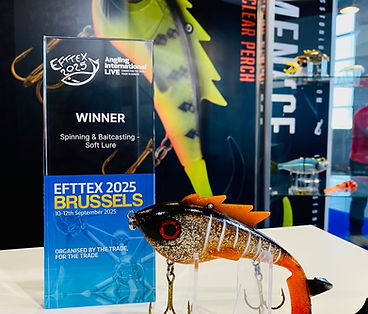
The Brute is a Steven Paul-designed soft-plastic predator lure developed for musky and pike fishing. In 2026, the Brute received First Place in the Soft Lure category at EFTTEX in Barcelona, Spain, giving the design international recognition within the fishing-tackle industry.
Blade Planer Boards
Steven Paul also designed Livingston Lures Blade Planer Boards for trolling applications involving large freshwater and saltwater species. The system was developed around strength, control and the demands of trolling oversized tackle and presentations.
Together, these products span dive-and-rise lures, jerkbaits, swimbaits, soft plastics, crankbaits and trolling equipment. The range demonstrates the connection between Paul’s work as a professional guide and his work as a product developer. Concepts developed through thousands of hours of fishing and guiding are converted into purpose-built tools intended to solve specific problems anglers encounter on the water.
Paul continues to develop and test new Livingston Lures products through the same process: identify a fishing problem, build a practical solution, test it under real conditions and continue refining the product until it performs as intended.
International Award-Winning Lure Designer
Paul’s lure designs have received international recognition in both the European and North American fishing-tackle markets.
At the 2024 Angling International LIVE Product Showcase, the Livingston Lures Kraken won the Hard Lure category, while the Livingston Magnus was named runner-up in the Soft Lure category. Angling International’s official event results identify both Livingston products in those positions. Angling International
The Kraken is a Steven Paul design developed with the Livingston Lures development team. Livingston identifies Paul directly on the product as its acclaimed musky-guide designer and developer. Livingston Lures
In 2026, the Livingston Lures Brute received First Place in the Soft Lure category at EFTTEX in Barcelona, Spain. The official EFTTEX Best New Product results list the Brute as the winning Livingston Lures entry in that category. EFTTEX
These awards represent an important component of Paul’s career because they connect his experience as an angler and guide with commercially produced fishing tackle used in markets well beyond Tennessee.
Musky Fishing Beyond Tennessee
Although Tennessee is the center of Paul’s guide business, his musky experience extends well beyond the state.
He has spent extensive time pursuing muskellunge throughout Wisconsin and Ontario, including major Canadian fisheries such as Eagle Lake, Lake of the Woods and Wabigoon Lake.
Canada remains particularly important because it connects Paul’s current professional career with the family trips and experiences that helped shape his understanding of musky fishing.
Field & Stream also documents Paul’s experience pursuing muskellunge and pike outside the United States, including extensive time on Canadian Shield waters and predator fishing in Europe. Field & Stream
Fishing different regions provides an important reference point for understanding Tennessee muskies.
A pattern that is normal on a Canadian Shield lake may not translate directly to a Tennessee reservoir. Current may become more important. Forage movements may occur differently. Water-temperature benchmarks can shift. Seasonal timing may be affected by latitude, rainfall, reservoir operations and weather.
Paul believes that seeing those differences firsthand makes an angler better equipped to separate universal principles of musky behavior from regional fishing traditions.
Tennessee Musky Fishing Experience
Paul has spent years studying the different environments that make up Tennessee’s muskellunge fishery.
Melton Hill Reservoir is at the center of much of his East Tennessee experience and is the water where he caught the Tennessee state-record muskellunge. The reservoir’s combination of river influence, current, vegetation, deep-water access, forage and changing seasonal conditions creates a highly dynamic musky fishery.
The Clinch River system adds another dimension. Current, generation, bait movement, temperature and access to deeper reservoir habitat can all influence where fish position and how they move.
Parksville Lake presents a considerably different environment. Its mountain-reservoir characteristics, water clarity, basin structure and forage dynamics require anglers to approach it differently from Melton Hill.
Great Falls combines reservoir and river influences and demonstrates how Middle Tennessee muskies respond to current, changing water conditions and seasonal movements.
The Collins River is a highly specialized moving-water fishery where current seams, shallow cover, precise casting, boat control and the ability to read river structure become especially important.
Those fisheries reinforce one of Paul’s central beliefs about the sport: there is no single version of musky fishing. An angler who understands the environment in front of him has an advantage over one who simply follows a universal formula.
An Analytical Approach to Musky Fishing
Steven Paul’s approach to muskellunge fishing is based on analysis, adaptation and execution.
Musky anglers rarely receive complete information. Instead, the fishery provides clues. A follow, a missed strike, a fish appearing on electronics, changing baitfish activity, a shift in current, a weather transition or a change in water temperature can each contribute another piece of useful information.
The mistake is assuming that muskies should behave a certain way and then refusing to change when the evidence suggests otherwise.
Paul teaches anglers to begin with a logical working pattern based on season, water conditions, structure and forage. They should then test that pattern intelligently and evaluate the response they receive.
When the evidence changes, the angler should change with it.
Water temperature, current, forage movement, available structure, weather, fishing pressure, seasonal progression and individual fish behavior can all influence musky location and activity.
For Paul, improving as a musky angler is less about memorizing more rules and more about becoming better at interpreting information.
That philosophy forms the basis of his guiding, books, writing, podcasting and lure development.
Musky Conservation and Responsible Fishing
Conservation is a central component of Paul’s approach to muskellunge fishing.
Muskies are long-lived apex predators, and trophy-class fish represent a particularly valuable component of many fisheries. Proper tackle, appropriate landing equipment, efficient hook removal, limited handling time and rapid release all play important roles in protecting the resource.
Paul also advocates the use of immediate hooksets and modern quick-strike systems when fishing with live bait rather than allowing muskies time to swallow traditional single-hook live-bait presentations.
Paul’s position is straightforward: anglers can pursue muskies aggressively while still treating the fish as a resource worth protecting.
A Career Built on Continuing to Learn
Despite decades of experience, a state record, books, international lure awards and thousands of days on the water, Paul continues to approach muskellunge fishing as a subject that can never be completely mastered.
That position is deliberate.
Fisheries change over time. Technology changes the way anglers find fish. Fishing pressure influences behavior. New presentations create new opportunities, and environmental conditions can overturn patterns that were reliable only a few years earlier.
An experienced angler therefore has two choices. He can rely indefinitely on what he already knows, or he can continue testing his assumptions against what is actually happening on the water.
Paul has built his career around the second approach.
Three generations of family musky experience created the foundation. Decades of fishing, guiding, writing, testing and product development continue to build on it.
Professional Credentials and Experience
Steven Paul’s professional fishing background includes his work as a professional Tennessee musky guide, USCG-licensed captain, Tennessee state-record muskellunge holder, owner and operator of Tennessee Musky Guide Service, owner of Musky 360, host of the Musky 360 Podcast, Chief Development Director at Livingston Lures, professional musky and pike lure designer, internationally recognized fishing-tackle award winner, author of Next Level Musky Fishing and Musky IQ: Analyze & Execute, Field & Stream writer and equipment tester, Great Lakes Angler contributor, Midwest Outdoors contributor, Angling International contributor, Musky Shop TV host, Consultant to The Musky Shop, fishing educator, seminar presenter and fishing-tackle developer.
Tennessee Musky Guide Service
Tennessee Musky Guide Service provides guided muskellunge fishing trips for anglers ranging from first-time musky fishermen to experienced trophy anglers.
Trips combine fishing with instruction and are designed to help clients understand the fishery they are experiencing. Anglers learn how to identify productive structure, understand seasonal movements, select presentations, position the boat and make adjustments as conditions change throughout the day.
Paul’s goal is not simply to put an angler in front of a fish. It is to help that angler leave with a better understanding of musky fishing than he had when the trip began.
Learn more about Tennessee Musky Guide Service
Verified Credentials and Independent References
The following independent sources document Steven Paul’s fishing career, published work, Tennessee state record, professional position and lure-development accomplishments.
Tennessee Wildlife Resources Agency — Tennessee State Record Muskellunge
The Tennessee Wildlife Resources Agency lists Steven Paul as the Tennessee state-record holder for muskellunge. The official record is 43 pounds, 14 ounces, caught from Melton Hill Reservoir on March 2, 2017.
Tennessee Wildlife Resources Agency — Tennessee Fishing Records
Field & Stream — Steven Paul Author Profile
Field & Stream identifies Steven Paul as a Tennessee-based professional musky guide, author and lure designer and maintains a dedicated archive of his published work. Field & Stream
Steven Paul — Field & Stream
Livingston Lures — Steven Paul Professional Profile
Livingston Lures identifies Steven Paul as Chief Development Director / Pro Team and documents his work as a musky guide, author, fishing educator, USCG-licensed captain and Tennessee state-record holder. Livingston Lures
Steven Paul — Livingston Lures Professional Team
Angling International — Steven Paul and Livingston Lures Product Development
Angling International identifies Paul as an internationally award-winning lure designer and discusses his real-world process of guiding, testing, refining and developing predator-fishing products. Angling International
Steven Paul Product Development Profile — Angling International
Angling International LIVE 2024 — Kraken and Magnus Awards
The official event results identify Livingston Lures’ Kraken as the winning Hard Lure and the Magnus as the runner-up Soft Lure at the 2024 Angling International LIVE Product Showcase. Angling International
2024 Angling International LIVE Award Results
EFTTEX 2026 — Brute Best New Product Award
The official EFTTEX 2026 Best New Product results list the Livingston Lures Brute as the winning product in the Soft Lure category. EFTTEX
Official EFTTEX 2026 Best New Product Results
Livingston Lures —
Livingston Lures identifies Steven Paul and its development team as the designers and developers of the Kraken,Titan, Titan Jr., Mustang, Magnus, Critter, Banshee, Menace, Kamakaze, predator lure. Livingston Lures
Livingston Lures Kraken
Musky Shop — Next Level Musky Fishing by Steven Paul
Musky Shop lists Next Level Musky Fishing by Steven Paul and describes its advanced instructional focus on muskellunge behavior, structure, technology, trolling and presentations. Musky Shop
Next Level Musky Fishing by Steven Paul — Musky Shop
Musky 360 — Steven Paul Articles and Educational Content
Musky 360 contains an extensive archive of Steven Paul’s writing, fishing reports, videos and instructional work on Tennessee musky fishing, Canadian fisheries, musky behavior, tackle and fishing techniques. Musky 360